

Summary
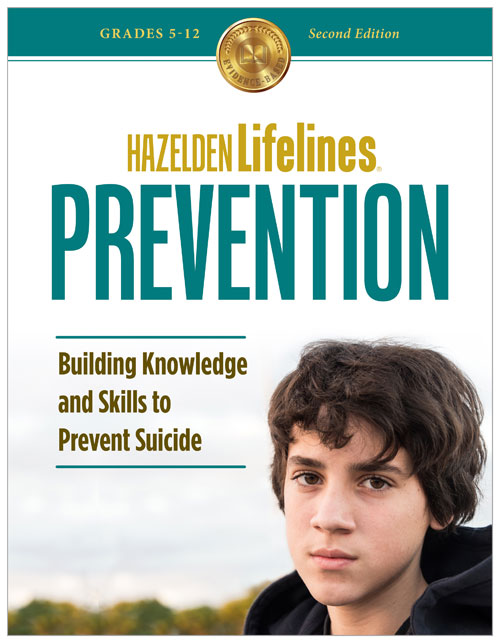
Lifelines Prevention®: Building Knowledge and Skills to Prevent Suicide is a comprehensive, whole-school suicide prevention curriculum that educates school faculty, parents, and students on the facts about suicide and their respective roles as suicide “preventers”. This newly revised edition uses updated language and new topics to reflect today’s best practices and youth culture, and now also covers grades 5-6 and 11-12, in addition to grades 7-10.
Additional outcomes:
Increased awareness of suicide and risk factors, increased suicide knowledge, improvement in attitudes about referring a friend in distress
Strategies supporting educational equity (CASEL)
Not available at this time.
Implementation
Below are key implementation details for this program. These specifications help determine if the program is a good fit for your school or organization.
Grade(s)
Elementary (K-5), Middle (6-8), High School (9-12)
Setting
Classroom, Schoolwide, Home
Language
English
Cost
$295 (includes teacher manual, DVDs, and USB)
# Lessons
Contact provider
Program Design
Tier 1 (Universal)
Technology Requirements
Includes DVDs and flash drive with reproduceable materials
Staffing Requirements
No additional
Professional Development
Contact provider
Outcomes
Decreased substance use
Improved attitude/behavior related to substance use
Advocate for reducing stigma associated with emotional and mental and behavioral health
Compare & contrast emotional, mental-behavioral illness, mental well-being and concurrent disorders
Decreased suicidal behavior
Describe how self-harm or suicide impacts other people
Describe laws related to minors accessing mental health care
Explain how to help someone who is thinking about attempting suicide
Identify school and community resources that can help a person with emotional, mental and behavioral health concerns
Improved Academic Performance
Improved attitude/behavior related to suicide
Improved identification of individuals at-risk for suicide
Improved Identity Development/ Agency
Improved Prosocial Behavior
Improved School Climate
Improved School Connectedness
Improved SEL Skills and Attitudes
Improved Teaching Practices
Increased help-seeking behavior
Reduced Emotional Distress
Reduced Problem Behavior
Mental Health Literacy Components
This program addresses the following mental health literacy components:
Understanding stigma and strategies for stigma reduction
Understanding how to foster & maintain positive mental health
Understanding how to seek help effectively
Understanding common mental health disorders, signs and symptoms, and treatments
Evidence of Effectiveness
An evaluation of Lifelines in Maine found that students in the intervention group demonstrated a significantly greater increase in knowledge about suicide, demonstrated significantly greater improvement in attitudes about suicide and suicide intervention, demonstrated significantly greater improvement in attitudes about seeking adult help, demonstrated significantly greater improvement in attitudes about keeping a friend's suicide thoughts a secret (Kalafat et al., 2007). Researchers at the University of Kentucky found that after middle school students participated in the Lifelines Prevention program, 98.5% understood the seriousness of suicide, 96.2% understood the risk factors of suicide (Klimes-Dougan et al., 2013).
Published Studies
Kalafat, J., Madden, M., Haley, D., & O'Halloran, S. (2007). Evaluation of Lifelines classes: A component of the school-community based Maine Youth Suicide Prevention Project. Report for NREPP. Unpublished manuscript. NREPP Review
Klimes-Dougan, B., Klingbeil, D. A., & Meller, S. J. (2013). The impact of universal suicide-prevention programs on the help-seeking attitudes and behaviors of youths. Crisis, 34(2), 82–97. https://doi.org/10.1027/0227-5910.a000178