
Summary
Second Step: Early Learning Curriculum, offered by the Committee for Children, provides a lesson-based approach to SEL. It includes programming for Pre-K and demonstrates evidence of effectiveness in Pre-K.
Strategies supporting educational equity (CASEL)
Not available at this time.
Implementation
Below are key implementation details for this program. These specifications help determine if the program is a good fit for your school or organization.
Grade(s)
Pre-K
Setting
Classroom, Home, Schoolwide
Language
English, Spanish
Cost
For additional information please contact the provider
# Lessons
28
Program Design
Tier 1 (Universal)
Technology Requirements
CD player, video/audio required for streaming lesson media
Staffing Requirements
No additional staffing required
Professional Development
Onsite in-person, Virtual
Outcomes
Improved Academic Performance
Reduced Emotional Distress
Improved Identity Development/ Agency
Reduced Problem Behavior
Improved School Climate
Improved School Connectedness
Improved Prosocial Behavior
Improved Teaching Practices
Improved SEL Skills and Attitudes
Advocate for reducing stigma associated with emotional and mental and behavioral health
Compare & contrast emotional, mental-behavioral illness, mental well-being and concurrent disorders
Describe how self-harm or suicide impacts other people
Describe laws related to minors accessing mental health care
Explain how to help someone who is thinking about attempting suicide
Identify school and community resources that can help a person with emotional, mental and behavioral health concerns
Decreased suicidal behavior
Improved attitude/behavior related to suicide
Increased help-seeking behavior
Improved identification of individuals at-risk for suicide
Decreased substance use
Improved attitude/behavior related to substance use
Evidence of Effectiveness
Results from a randomized control trial published in 2017 supported the effectiveness of Second Step Early Learning for Pre-K students. This evaluation included 492 students in many public and private child care programs in the Northeast (47% white, 39% Hispanic, 26% Black/African American). This evaluation found that Pre-K students who participated in the program experienced significantly greater increases in executive functioning skills (i.e., task required inhibitory control, attention, and working memory) compared to students in the control group (outcomes reported 36 weeks after baseline while controlling for outcome pretest).
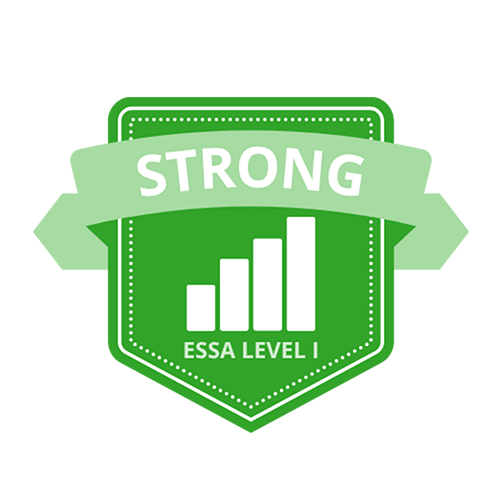
Academic
Strong
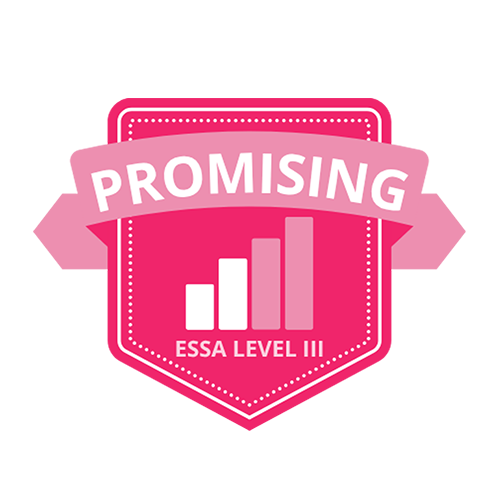
Problem Behaviors
Promising
Strong Relationships
Promising
Emotional Wellbeing
Strong
Published Studies
Refer to the provided CASEL for the most up-to-date published studies.
Upshur, C. C., Heyman, M., & Wenz-Gross, M. (2017). Efficacy trial of the Second Step Early Learning (SSEL) curriculum: Preliminary outcomes. Journal of Applied Developmental Psychology, 50, 15-25.